
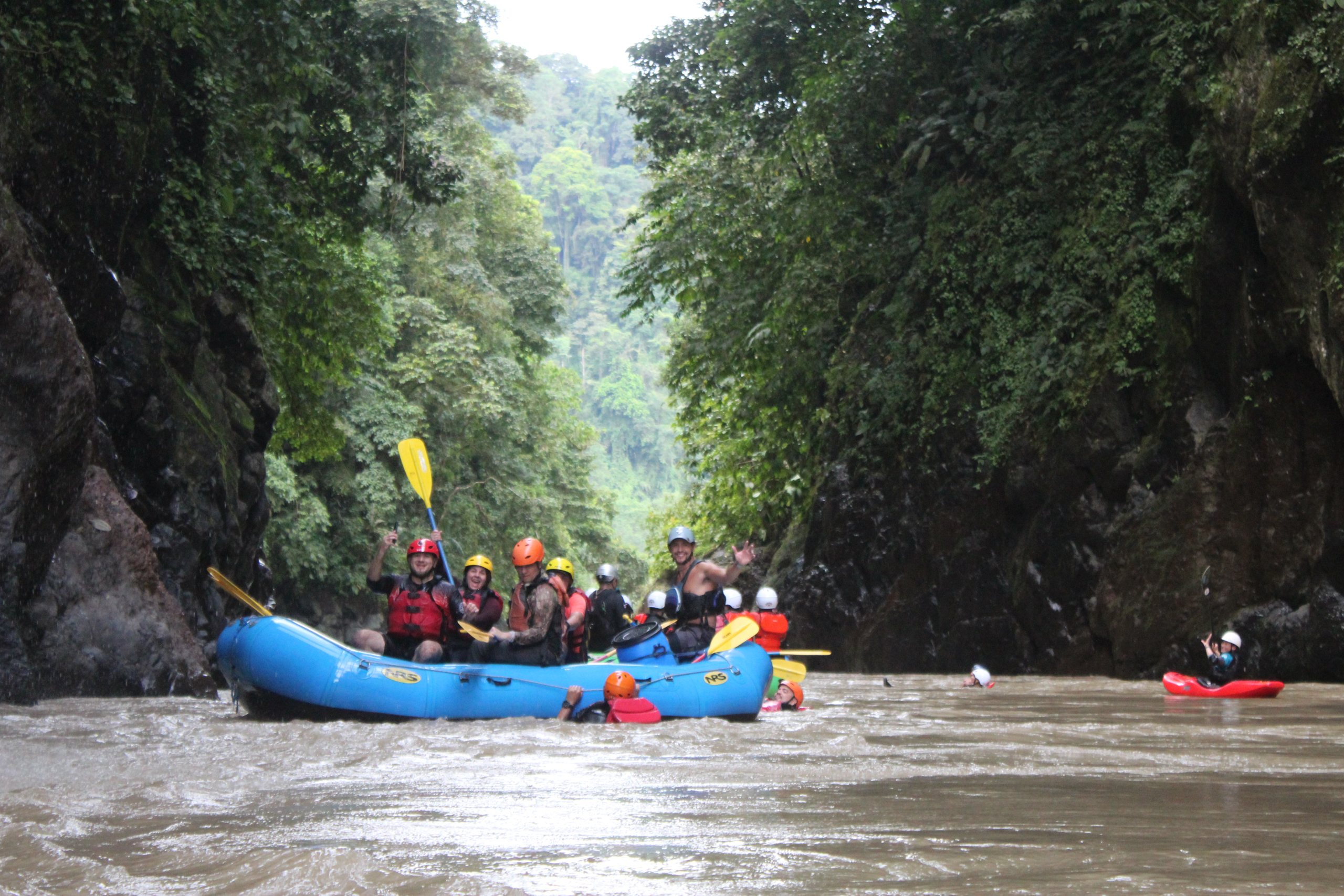
If you’re planning a week in Costa Rica, you’ve probably seen the same question come up in every rafting thread: Pacuare vs Sarapiquí, and is the Pacuare really worth the detour? I totally get why people ask. We’re based in Turrialba, east of San José, where our Pacuare trips start. If you’re staying in La Fortuna, Turrialba is a long drive away, while the Sarapiquí is one of the rivers people raft from the Arenal area. That’s a big difference when you only have a few days.
We run trips on three of the four rivers in this post. We raft the Pacuare and the Pejivalle (formerly Pejibaye) as day trips, and two of our Whitewater Weeks spend two days on the Sarapiquí. The fourth, the Reventazón, flows right past Turrialba, and so much has changed on it that it gets its own section. I’ve been guiding since 2008, and I spent seasons guiding on the Pacuare before we started Jungle Flow, so I’m not going to tell you there’s one right river for everyone. It depends on how much time you have, how old everyone is, and where you’re headed next. Here’s how I’d think it through.
First, a quick word on “Class”
Rivers are graded on the International Scale of River Difficulty, from Class I (easy moving water) to Class VI (the far edge of what anyone runs). Class III means irregular waves you have to steer around. Class IV means powerful but predictable rapids that need precise boat handling. Most rivers carry a range, like “Class III–IV”, because the difficulty changes from rapid to rapid and with the water level.
The Pacuare: why people make the trip
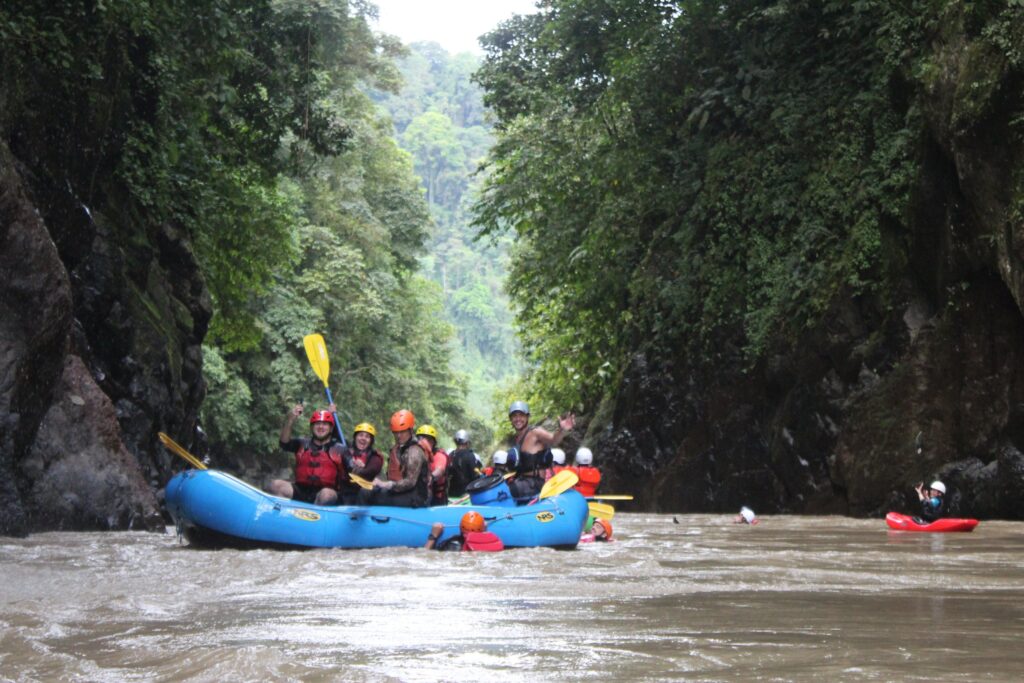
The Pacuare starts high in the Talamanca mountains and runs down toward the Caribbean. The stretch most rafters know, the Lower Pacuare, is Class III–IV and drops through the Huacas gorge on its way to Siquirres. Once you’re in the canyon, rock walls and rainforest rise on both sides and waterfalls spill straight into the river. Costa Rica’s tourism board calls it “the country’s longest and most spectacular river trip”, and I won’t argue with that. (Above it sits the Upper Pacuare, Class IV–V, which is mostly a kayaker’s run.)
The best news about the Pacuare: it still runs free! There’s no hydro dam on its main channel. Turrialba voted overwhelmingly against damming it back in 2005, and a 2015 executive decree keeps dams off it until 2040. At the end of 2025, a bill to make that protection permanent was before the Legislative Assembly’s environment committee.
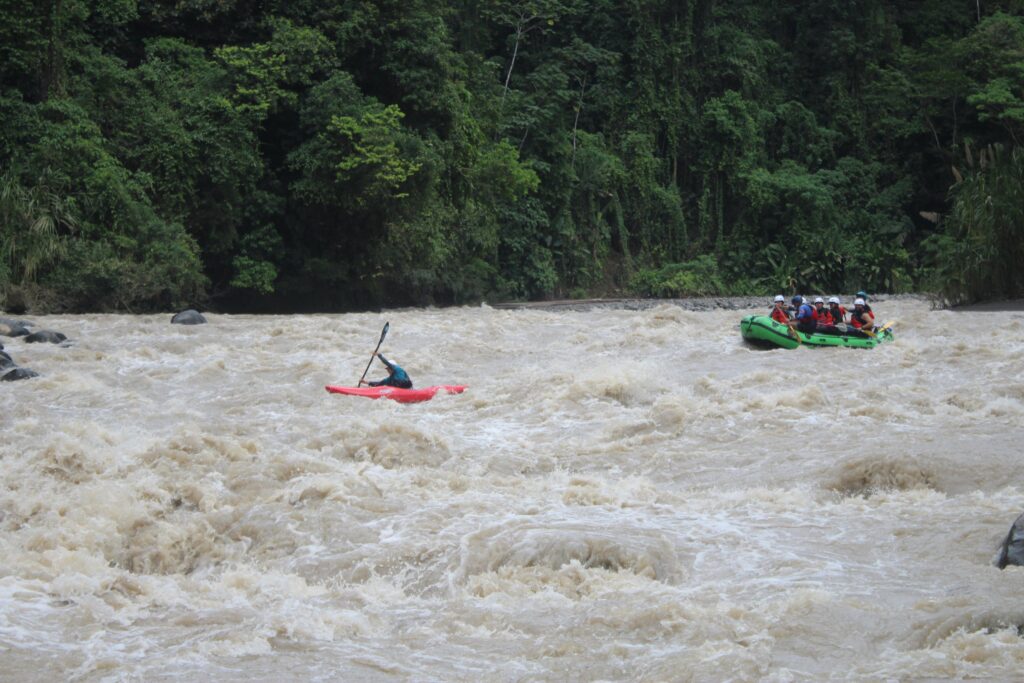
Who it suits: our Pacuare day is for ages 12 and up. You don’t need to have rafted before (it’s not mandatory, but it helps). You should be in good physical condition, comfortable in moving water, and ready for an active day of paddling and getting splashed. Everyone gets a safety briefing and a gear fitting before we launch. The details are on our Pacuare one-day trip page, and if you’re deciding between a day and the overnight, I wrote a whole post on the Pacuare in one day or two.
One more thing you’ll read everywhere is that National Geographic named the Pacuare one of the world’s best rafting rivers. Some pages say top five, others say top ten, and none of the ones we checked links to the original list. I’d rather you come for the river than for the ranking.
The Sarapiquí: the easy call from La Fortuna
The Sarapiquí drains north, into the San Juan River on the Nicaraguan border. Costa Rica’s tourism board rates it Class II–III and calls it a good trip for beginners, run from both San José and the Arenal area. Our Whitewater Week (Class 3–4) and our Women’s Whitewater Week both finish their river days there: the Lower Sarapiquí one day, then the Upper or the Lower the next.
Here’s the honest part. Our Sarapiquí days are part of those weeks, and we don’t offer a Sarapiquí day trip. If you’re staying in La Fortuna for two nights and want one fun day of whitewater, raft the Sarapiquí with an outfitter close to you. A long drive there and back for one day on the Pacuare isn’t how I’d want you to remember your vacation.
The Pejivalle: our family river
First, the name. The town in the canton of Jiménez was called Pejivalle back in the 1700s and only got its other name on paper in 1967. Its residents pushed to get the old name back, and in 2025 a law made Pejivalle the district’s official name. Google Maps still shows the old one (which is also the name of a palm fruit), so that’s why you’ll see both. We go with what the town chose.
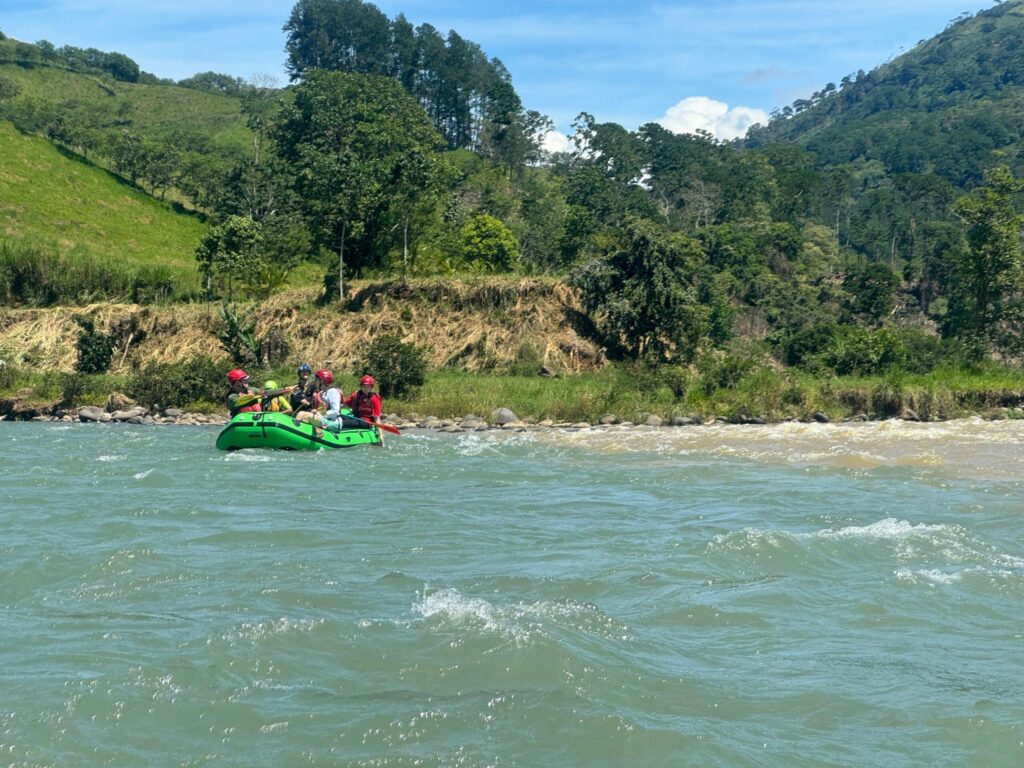
The river itself is Class II–III, with gentle rapids, playful waves, and clear pools to swim in, and it runs past local farms. Pejivalle is roughly an hour south of Turrialba. No experience is needed, and kids can come from age 8. It’s also where we teach our whitewater kayaking classes, and on our Whitewater Week (Class 3–4) and Women’s Whitewater Week it’s the first river day, the warm-up before the Pacuare.
So if your kids are under 12, start here. There’s more on ages in my post on white water rafting in Costa Rica with kids, and the trip details are on our Pejivalle one-day trip page.
The Reventazón: what the dams changed
The Reventazón starts on the slopes of Irazú volcano and runs about 145 km through the Orosí and Turrialba valleys to the Caribbean. It’s our neighbor: we climb on the basalt cliffs above its valley at Cachí. We don’t run rafting trips on it, so I’ll stick to what’s on the record.
Three hydroelectric dams sit on it now: Cachí (1966), Angostura (generating since 2002), and the Reventazón dam near Siquirres, which started generating in September 2016. A 2020 study counts 34.2 km of river habitat lost between the last two dams. A 2016 newspaper report found that about a third of the river’s course runs with 90% of its flow taken out. When the dams went in, a lot of the area’s commercial rafting shifted over to the Pacuare.
Rafting carries on, and the people who manage the river count rafting among the uses its flow has to allow for. Still, how much water comes down on any given day depends partly on releases from the dams, and descriptions written before the dams went in may not match the river you’ll find today. None of that is a knock on the outfitters rafting it now. They run the water they’re given. If someone tells you the Reventazón is “just like the Pacuare”, though, ask which section and what the release is that day.
Before you flow: so, is the Pacuare worth the detour?
Here’s how I’d answer it, depending on your trip:
- You’re in La Fortuna for a night or two. Raft the Sarapiquí. It’s closer, it’s fun, and you keep the rest of your day.
- Your kids are under 12. Our Pacuare trips start at age 12, so come to the Pejivalle.
- You have a week and you’re heading to the Caribbean anyway. Then the Pacuare isn’t really a detour, because it’s on the way. The river runs toward the coast, and the overnight takes out (paddler-speak for where the trip ends) about an hour from the Caribbean, with your car brought to meet you if you arrange it. Check the best time of year to raft first, and if Puerto Viejo is where you’re headed, here’s how to raft your way from San José to Puerto Viejo.
- You paddle, or you want to get better at it. Our Whitewater Week (Class 3–4) runs the Pejivalle, the Upper Upper Pacuare (the stretch above the usual rafting run), the Pacuare overnight, and two days on the Sarapiquí, so you don’t have to choose. It has departures in November, December and early January.
- You’re still not sure. Try Find Your Flow, our short questionnaire. Rafting is already ticked, so just tell it how much time you have and who’s coming, and it suggests trips.
So is the Pacuare worth the detour? For a lot of people, yes, as long as it’s a planned part of the trip and not a long day squeezed in between other plans. For others, the closer river is the right call, and I’ll happily tell you so.
Where are you staying, and how many days do you have? Tell us on a short call and we’ll help you work out which river fits your week.