
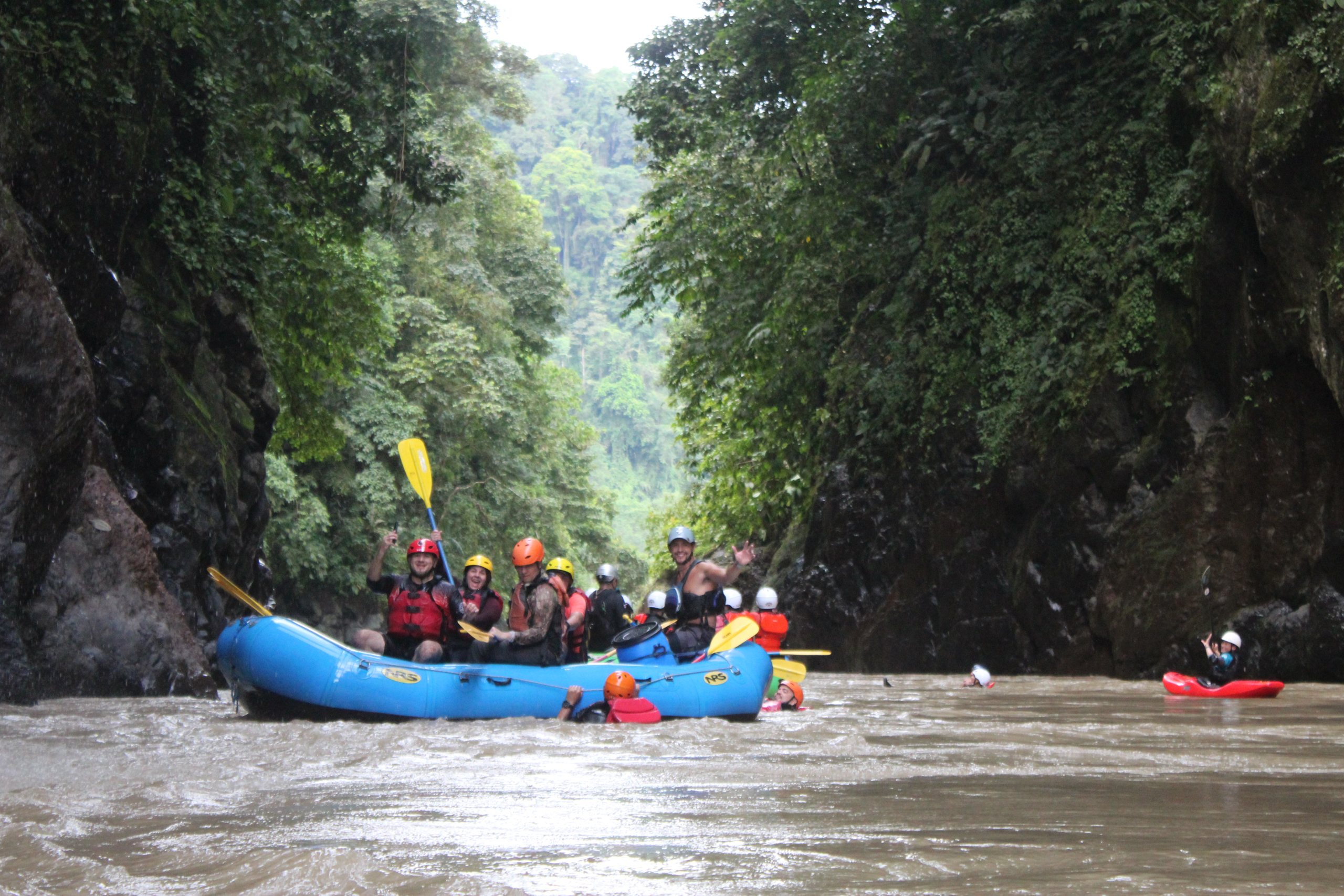
If you’ve ever looked at a map of Costa Rica and tried to work out how to get from San José to the Caribbean coast, you know the usual answer: a long day on the road. It’s about 215 to 222 km to Puerto Viejo, and the drive takes 4 to 5 hours. Rafting from San José to Puerto Viejo, by way of the Pacuare, is my go-to recommendation. You head east to Turrialba, spend two days paddling the Pacuare River downstream toward the Caribbean, and take out already about an hour from the coast.
The river becomes your transfer. Here’s how it works, what to plan around, and who it suits.
The usual way: Route 32 over the mountains
Most people, and the public bus, go the same way. From San José you take Route 32 through Braulio Carrillo National Park, past Guápiles and Siquirres to Limón, then follow Route 36 south along the coast. Cahuita comes first. Puerto Viejo is the next town down, and Manzanillo is about 13 km past that.
You have a few ways to cover that road:
- Driving yourself takes about 4 to 5 hours.
- The public bus, run by MEPE, takes about 4 hours to Cahuita and 4.5 to Puerto Viejo. A local website that keeps track of the timetable calls those times “best cases really.”
- Shared and private shuttles run the route too, in about 4 to 6 hours.
Route 32 is a mountain road through rainforest, and landslides close it from time to time after heavy rain. When that happens, one of the detours the transport ministry points drivers to runs through Turrialba. The bus takes that detour too, which adds about an hour. (So our little town is already on the backup plan. We like to think of it as the scenic one.) The Turrialba road has had its own landslides, so whichever way you go, check the road status on the day you travel.
The river way: Turrialba, the Pacuare, then the coast
Here’s the thing about the Pacuare: it starts up in the Talamanca mountains and flows all the way to the Caribbean. Its lower section, the stretch known for Class III–IV whitewater, runs down to Siquirres, the same town Route 32 passes on its way to Limón. The river is already going where you’re going, so you might as well ride it.
Getting to Turrialba. Turrialba is our home base, about 90 minutes from San José. If you’re flying in, our Whitewater Weeks are a good model: land, spend the night in San José, and head out to Turrialba the next morning. The Pacuare overnight includes transport from Turrialba, and we confirm your meeting point and departure time with you before the trip.
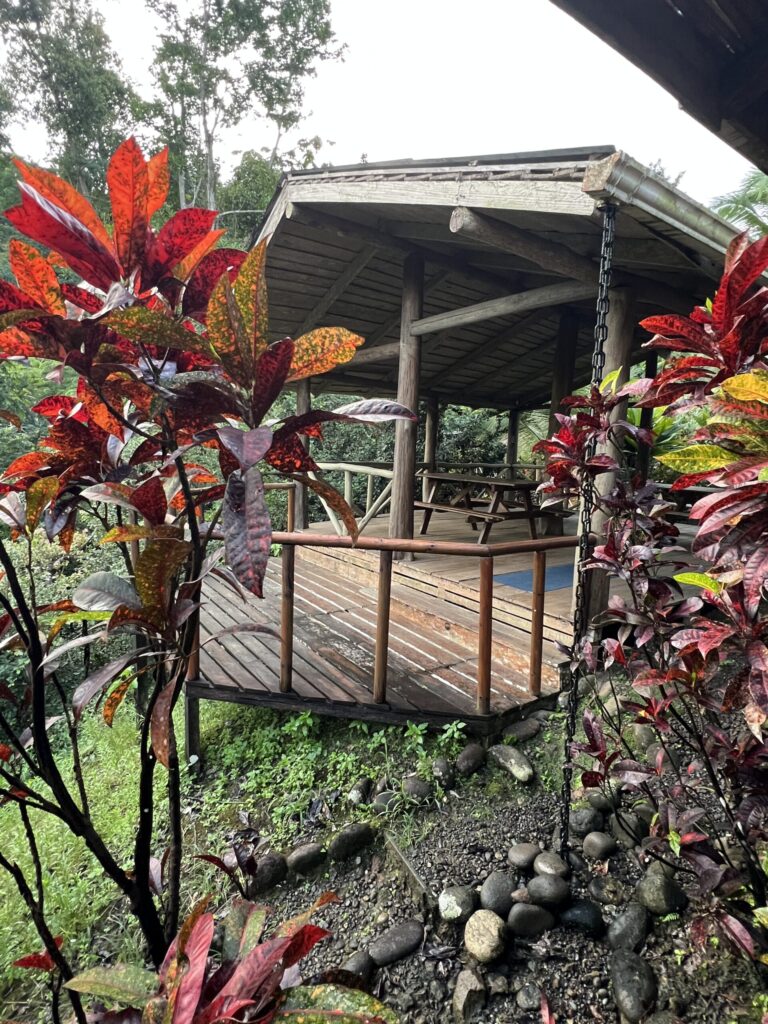
Day one. You paddle Class III–IV rapids through rainforest and canyon, with stops to swim beneath waterfalls and a riverside lunch. You reach the Pacuare River Ecolodge in time for happy hour (mocktails are totally fine, just ask), then it’s dinner and an optional short night walk under the canopy. The cabins are screened, with real beds, cozy blankets, and a private bathroom with a toilet and shower (yes, an actual shower, in the jungle!). What the lodge doesn’t have is electricity. It’s remote, so charge your phone before you go and bring a headlamp or flashlight. We’ll have extras if you forget.
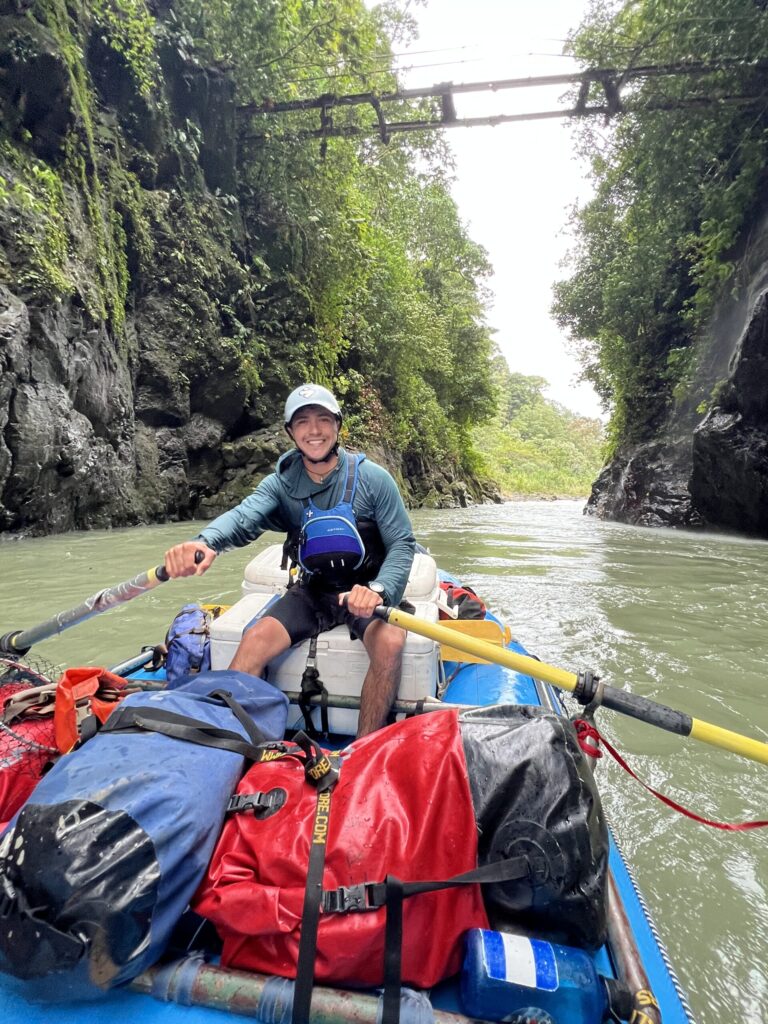
Day two. You wake up to tropical birds and the rush of the river, have a full breakfast, and paddle back into the canyon for another stretch of rapids, with lunch on the final day. Then you take out near the Caribbean side. The coolest thing is that you’re already about an hour away from the Caribbean!
Every overnight runs with professional guides, and the rafting equipment and safety gear are included.
Your car, your bags, and the coast
Now the practical part:
If you’re driving. We can arrange vehicle transport so your car meets you at the end, which saves you hours of driving. You drive to Turrialba, raft for two days, and your car is waiting for you when you take out. Mention it when we plan your trip, and we’ll work out the details together.
If you’re not driving. We help with transport, and we have a good friend who has a rental car company in Turrialba. Tell us where you’re heading next and we’ll sort out the logistics with you.
Your bags. For the river, you pack one small overnight bag: a second set of quick-drying clothes, a dry change for after rafting, and long pants and a long-sleeved shirt for the evening. We store it in a dry bag for the river. Keep the rest of your luggage compact, and if you’re traveling onward, we can help coordinate it.
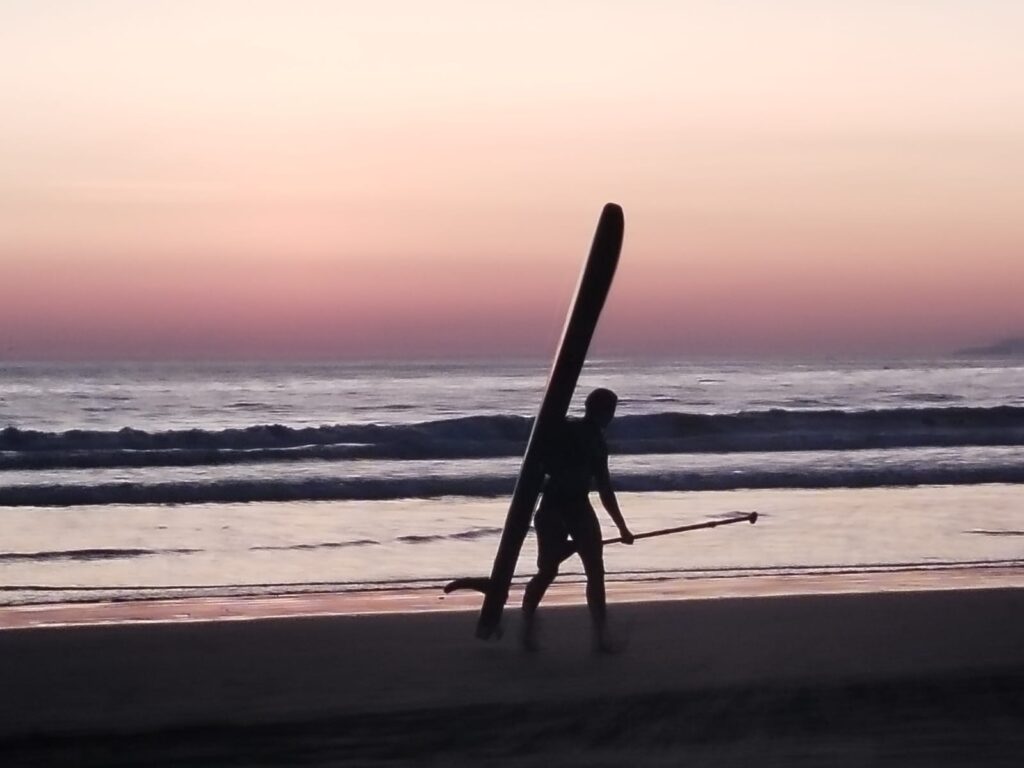
The last stretch. From the take-out you head for the coast, then south on Route 36. Where you stay is your call. Cahuita, the first town you reach, is where I usually point people, and Puerto Viejo is the next one down. Wherever you’re headed, we can help you get on to it.
What to know before you flow
- The water. The international scale for rapids runs from Class I to Class VI. Class III is intermediate and Class IV is advanced: big, powerful water that takes precise moves. Reading those moves is your guide’s job. Yours is to paddle hard when they call it.
- Who it suits. Beginners and experienced paddlers alike, ages 12 and up, with a minimum of two people. Come ready for two active days and plenty of splashing.
- Who it doesn’t suit (yet). Kids under 12. If you’re traveling with younger adventurers, ask me about the Pejivalle (formerly Pejibaye), our family river for ages 8 and up, and have a look at my post on rafting in Costa Rica with kids.
- What to bring. On the river, a swimsuit with quick-drying clothes over it, and secure water shoes or sandals with a heel strap. In your overnight bag, along with the clothes above: secure shoes for the lodge and trails, a towel, sunscreen, insect repellent, a headlamp or flashlight, and any personal medication. We provide the guides, rafting equipment and safety gear. The full list is on the trip page.
Short on days? Ask about the one-day trip
If you can only give the river one day, the Pacuare one-day trip runs the same Class III–IV river from Turrialba in a single day. If you’re heading to the coast afterwards, mention it on your call and we’ll figure out how the day fits. If you’re torn between the two, I wrote a whole post on the Pacuare in one day or two. If you have the time, though, the overnight is the one I’d point you to.
When to plan it
The Caribbean side keeps its own calendar. Costa Rica’s National Meteorological Institute has said that, for the Caribbean region, the idea of the rainy season ending and the dry season starting doesn’t apply, even in a normal year. So don’t plan your beach days off the Pacific coast’s calendar. I go through when to raft in Costa Rica, month by month in a separate post.
Building it into your week
If people tell me early that they’re heading to the Caribbean, the logistics often work out really nicely. The overnight can be the bridge between a few days of adventure around Turrialba and a few days on the beach. Have a look at our custom multi-day trips, or take two minutes with Find Your Flow (I’ve already ticked the Caribbean for you).
So, you can spend four or five hours on Route 32, or two days on the river with waterfalls, a night in the jungle, and the Caribbean waiting at the end. I know which one I’d pick. Which one sounds more like your trip?
Schedule an Itinerary Consultation and we’ll map out the route together.